
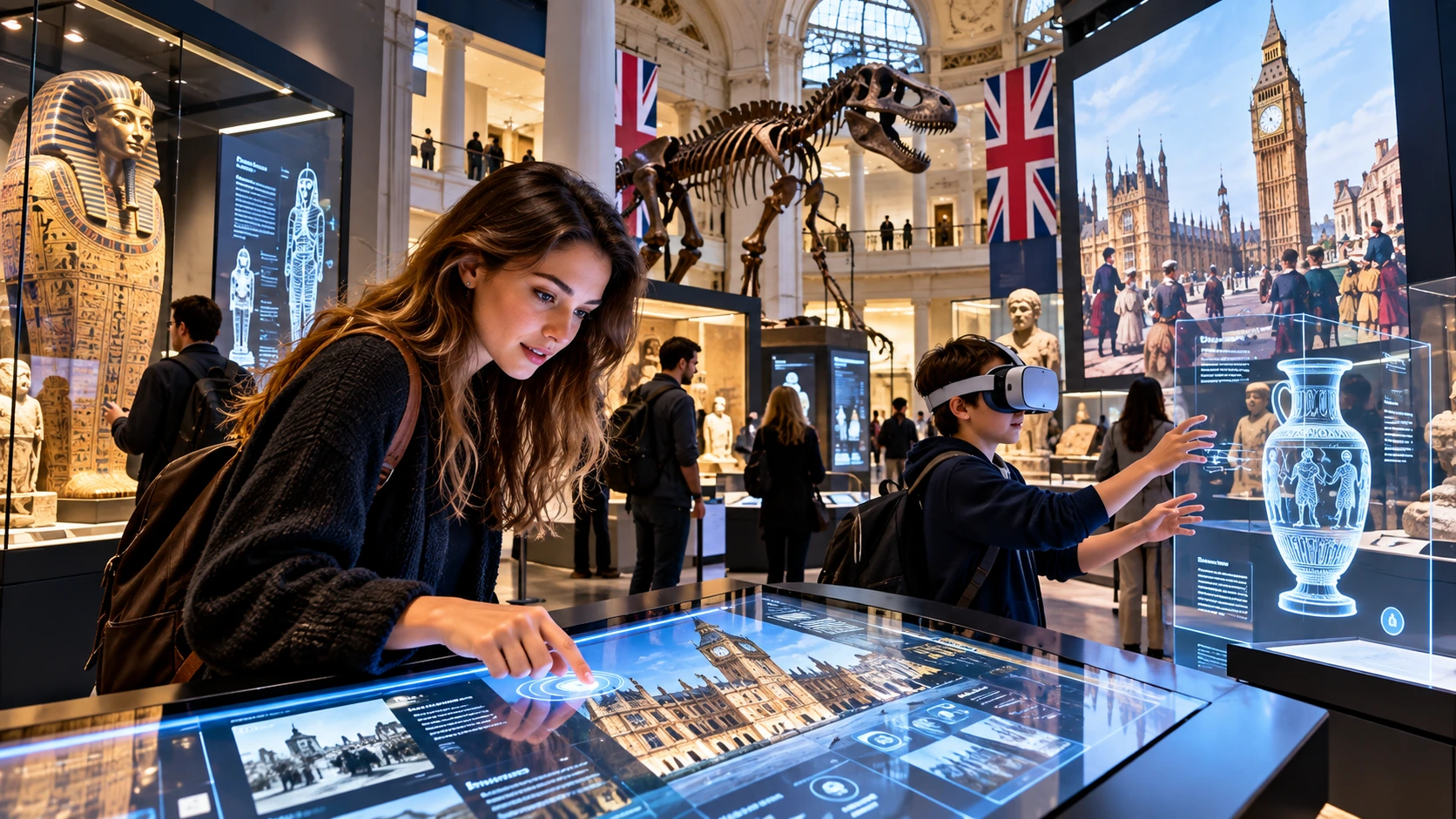
Museums have long been places where people can view artifacts, paintings, documents, sculptures, and objects from the past. However, modern museums are changing the way visitors experience history. Instead of simply looking at exhibits behind glass, visitors can now interact with digital displays, virtual reality, augmented reality, touchscreens, audio guides, and immersive installations. These technologies make history more engaging and help people understand the stories behind important objects and events.
Interactive Touchscreens Bring Information to Life
One of the simplest ways museums use technology is through interactive touchscreens. Visitors can explore maps, timelines, photographs, historical documents, and additional information by tapping the screen. Instead of reading a long description beside an exhibit, visitors can choose the information they are most interested in.
For example, a touchscreen next to an ancient artifact might allow visitors to explore where it was discovered, how it was made, what it was used for, and what daily life looked like during that period. This approach gives visitors more control over their learning experience.
Virtual Reality Creates Immersive Experiences
Virtual reality is becoming an increasingly useful tool for museums. With a VR headset, visitors can experience locations and environments that may no longer exist or cannot be easily visited.
A museum could recreate an ancient city, historic battlefield, archaeological site, or long-demolished building in a virtual environment. Visitors can look around and explore the setting as though they were physically present.
This can be particularly valuable when museums want to explain historical environments rather than simply display individual objects. Instead of seeing a broken column from an ancient structure, visitors may be able to experience how the complete building once looked.
Augmented Reality Connects the Past With the Present
Augmented reality, or AR, adds digital information to the real-world environment. Museums can use smartphones, tablets, or specialized devices to provide additional layers of information over physical exhibits.
For instance, visitors might point a device at an archaeological artifact and see a digital reconstruction showing how it originally appeared. A historical painting could be accompanied by animated details explaining the people, clothing, architecture, or events represented in the scene.
AR can make exhibits more understandable without changing the original objects themselves.
Digital Reconstructions Help Explain Lost History
Many historical sites have been damaged, destroyed, or changed over time. Technology allows museums to digitally reconstruct these places.
Three-dimensional modeling can recreate buildings, monuments, rooms, and even entire historical landscapes. Visitors can then compare what remains today with what researchers believe existed in the past.
These reconstructions can be especially helpful for younger visitors because visual representations often make complicated historical information easier to understand.
Audio and Multimedia Make Exhibits More Accessible
Technology is also improving accessibility. Digital audio guides can provide explanations in different languages and allow visitors to listen rather than read. Captions, transcripts, visual descriptions, and other digital tools can make exhibitions easier to experience for people with different needs.
Museums can also combine photographs, videos, sound effects, music, and narration to create a richer presentation. Historical information can become a multisensory experience rather than a collection of written descriptions.
Gamification Encourages Visitors to Participate
Some museums are introducing game-like activities to encourage participation. Visitors may solve puzzles, complete challenges, search for clues, or answer questions while moving through an exhibition.
Gamification can make learning feel less like a traditional lesson and more like an exploration. Children and families may become more interested in historical subjects when they are given an active role in discovering information.
Technology Allows Museums to Reach People Online
The interactive museum experience does not have to end when visitors leave the building. Museums increasingly use websites, digital archives, online exhibitions, virtual tours, and social media to make collections available to people around the world.
Someone who cannot travel to a museum can still explore selected objects, historical photographs, documents, and educational resources online. Digital collections can also help researchers and students access materials that might otherwise be difficult to study.
Balancing Technology With Authentic Artifacts
Although technology offers many advantages, museums still need to protect the importance of original objects. Digital experiences should support historical artifacts rather than distract from them.
A virtual reconstruction can help explain an ancient building, but seeing an original object can provide a different sense of connection with the past. The most effective exhibitions often combine authentic artifacts with carefully designed technology.
The Future of Interactive History
As technology continues to develop, museums are likely to create even more personalized and immersive experiences. Artificial intelligence, advanced 3D modeling, spatial audio, and interactive displays may allow visitors to explore history in increasingly dynamic ways.
The goal is not simply to make museums more entertaining. Technology can help visitors ask questions, understand context, and connect individual objects with larger historical stories. By combining preservation with innovation, museums can make the past feel more accessible and meaningful to modern audiences.